RHODIUM MICROGRAVITY BIOPROSPECTING 05
Rhodium Microgravity Bioprospecting-05 is a new extension of Rhodium Scientific’s Bioprospecting Program. This mission is a collaboration with the U.S. Office of Space Commerce (OSC) and the National Institute of Standards and Technology (NIST). Under a first-of-it-kind long term public-private partnership, a Cooperative Research and Development Agreement (CRADA) was signed between the parties. On this mission, Rhodium Scientific is hosting reference and research-grade materials developed by NIST onboard the ISS. After approximately four months of exposure to the space environment, these space-flown materials will be returned alongside matched ground control samples for comparative study.
Researchers will analyze chemical and physical property changes induced by exposure to microgravity, radiation, and other space environmental factors. A portion of both space-flown and ground control specimens will be preserved in the Rhodium Space BioBank™ to support future research. Findings will be published and shared with the scientific community, with implications for pharmaceuticals, materials science, agriculture, crystallography, and semiconductor industries.
Funded in part by NSF; Sponsored by ISS National Lab with support from NASA
MISSION TAGS: #ReferenceMaterials #AerospaceMedicine #MaterialsStandards #NIST #ChemicalStability #SpaceBioBank #OSC #BusinessofScience
NASA.GOV: Rhodium Microgravity Bioprospecting 05
NASA MISSION OPNOM: Rhodium Microgravity Bioprospecting 05
LAUNCHED ON: SpX-33
RHODIUM TOMATOSPHERE 01
The Rhodium Tomatosphere 01 mission exposes tomato seeds to the space environment to conduct student experiments back on Earth. Students will plant space-flown seeds and controls to determine differences in germination and growth. The Tomatosphere program uses the excitement of space exploration to engage K-8 students in STEM.
Collaboration with First The Seed Foundation
Funded and sponsored by ISS National Lab with support from NASA
MISSION TAGS: #STEM #ISSNL #PlantsInSpace #Agriculture #SpaceBiology #FirstTheSeedFoundation #LetsTalkScience #BioBank #BusinessofScience
NASA.Gov: Rhodium Tomatosphere 01
NASA MISSION OPNOM: Rhodium Tomatosphere 01
LAUNCHED ON: Crew-12
RHODIUM SPACEAG VETERANS
Rhodium SpaceAg Veterans is the fourth mission within Rhodium Scientific’s Astrobotany Program, to study terrestrial crop science challenges. This mission investigates how microgravity and low-dose radiation affect plant growth. By testing seeds and microbial populations in the ISS environment, the mission aims to discover novel adaptations that enhance nitrogen cycling, soil productivity, and crop yield. These insights will be directly translatable to improving agricultural outcomes on Earth.
MISSION TAGS: #Astrobotany #Agriculture #PlantsInSpace #CropScience #MicrobialConsortia #BusinessofScience
Sponsored by ISS National Lab with support from NASA
NASA.GOV: Rhodium SpaceAg Veterans
NASA MISSION OPNOM: Rhodium SpaceAg Veterans
LAUNCHED ON: SpX-33
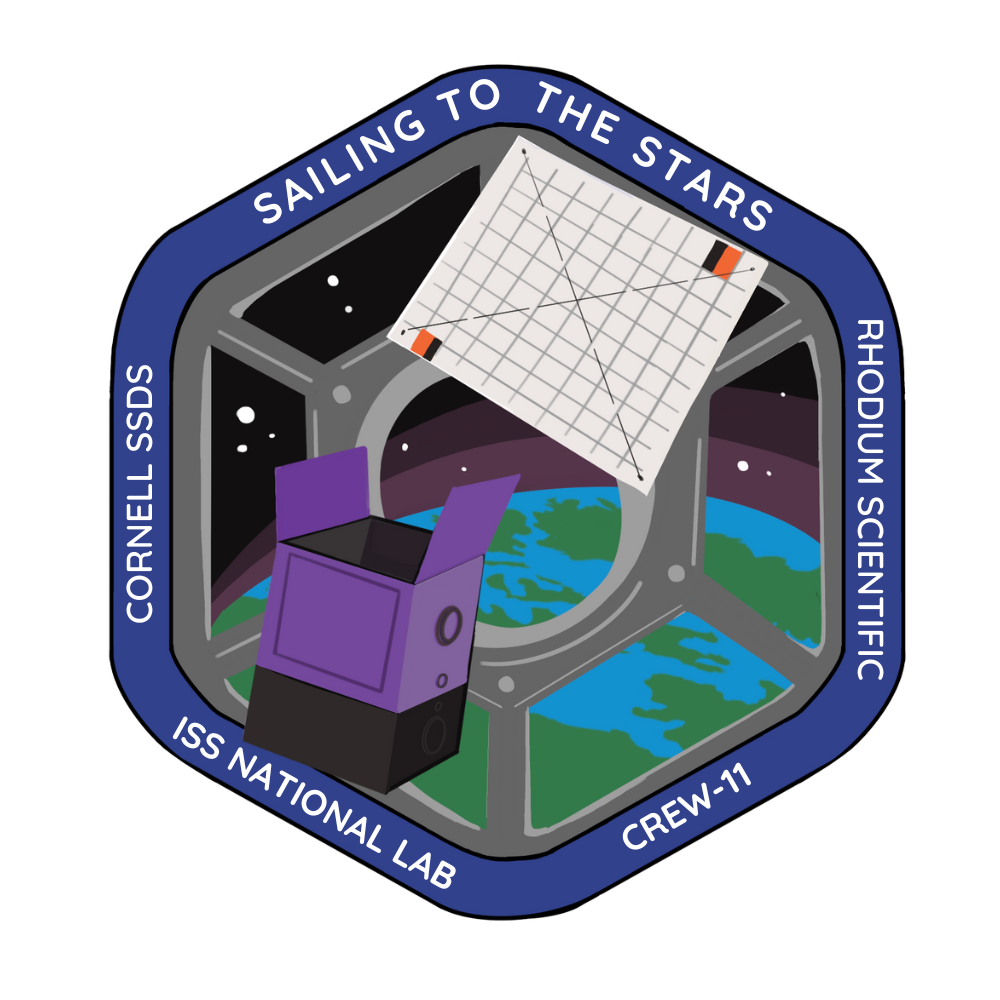
RHODIUM SAILING TO THE STARS
Sailing to the Stars is a technology demonstration designed by Cornell University’s Space Systems Design Studio in partnership with Rhodium Scientific. The mission tests the deployment dynamics of lightweight light sails in microgravity, a critical step toward enabling interstellar travel with ChipSat-scale spacecraft. Using a CubeSat-sized deployer aboard the ISS, astronauts will record multiple sail releases to evaluate stability and spin-stabilization methods. The experiment engages students and the public through workshops, livestreamed demonstrations, and museum partnerships, inspiring future space engineers while maturing a breakthrough propulsion technology.
Funded and sponsored by ISS National Lab with support from NASA
MISSION TAGS: #LightSail #TechnologyDemonstration #CubeSat #STEMOutreach #InterstellarPropulsion #BusinessofScience
NASA.GOV: Rhodium Sailing to the Stars
NASA MISSION OPNOM: Rhodium Sailing to the Stars
LAUNCHED ON: Crew-11

RHODIUM MICROGRAVITY BIOPROSPECTING 04
Rhodium Microgravity Bioprospecting 04 continues Rhodium Scientific’s effort to establish microgravity as a powerful tool for biotech innovation. This fourth mission tests new microbial strains not yet exposed to spaceflight conditions, focusing on evolutionary divergence under long-duration growth in the ISS environment. The mission leverages Rhodium’s Science Chamber facilities to cultivate selected microbes, analyze genomic shifts, and predict novel biochemical functions. Outcomes are expected to advance microbial ecology knowledge and identify biotech-relevant traits with commercial potential.
Funded in part by NSF; Sponsored by ISS National Laboratory with support from NASA
MISSION TAGS: #Bioprospecting #SpaceBiotechnology #MicrobialEvolution #Bioinformatics #SpaceManufacturing #BusinessofScience
NASA.GOV: Rhodium Microgravity Bioprospecting 04
NASA MISSION OPNOM: Rhodium Microgravity Bioprospecting 04
LAUNCHED ON: Crew-11
RHODIUM USAFA NIGHT
This investigation, conducted by the U.S. Air Force Academy (USAFA) and University of California-Riverside and under a CRADA with USAFA and Rhodium Scientific, could enhance our knowledge of the changes seen in plants grown in space and their effect on development and growth, supporting methods to increase crop production for future missions. Results from this study could identify modifications that improve crop production on Earth, particularly in enclosed structures.
Funded by the DoD Space Test Program; Sponsored by ISS National Laboratory with support from NASA
MISSION TAGS: #Astrobotany #SpaceAgriculture #SpaceTomatoes #BusinessOfScience
NASA.GOV: Rhodium USAFA NIGHT
NASA MISSION OPNOM: RHODIUM USAFA NIGHT
LAUNCHED ON: Space-X; SpX-32
RHODIUM PLANT LIFE
This Plant Life mission conducted by the U.S. Air Force Academy (USAFA) under a CRADA with Rhodium Scientific, investigates food supply chain resilience. Due to the high cost of transporting food to space, developing the ability to produce plants for food in space is crucial for planning sustainable, long-term missions. Results from this study also support fundamental plant growth research and could help identify genetic mechanisms to increase crop production on Earth.
Funded by the DoD Space Test Program; Sponsored by ISS National Laboratory with support from NASA
MISSION TAGS: #Astrobotany #SpaceAgriculture #PlantsinSpace #BusinessOfScience
NASA.GOV: Rhodium Plant Life
NASA MISSION OPNOM: Rhodium Plant Life
LAUNCHED ON: Space-X; SpX-32
RHODIUM WATER FILTRATION 01
This investigation tested a new urine-to-water filtration device operated inside Rhodium Scientific hardware aboard the ISS. This new way to filter urine could identify ways to enhance water filtration in microgravity and support increased recycling of wastewater for future space missions. Improved water filtration devices could also reduce the cost and energy needed to produce safe water in remote or resource-limited locations on Earth.
Collaboration with University of Puerto Rico-Mayagüez
Funded by the Puerto Rico Science, Technology and Research Trust; sponsored by ISS National Laboratory with support from NASA
MISSION TAGS: #WaterFiltration #SustainabilityinSpace #EnergyEfficiency #WeAreTheTrust #BusinessofScience
NASA.GOV: Rhodium Water Filtration 01
NASA MISSION OPNOM: Rhodium Water Filtration 01
LAUNCHED ON: Space-X, Crew-10
RHODIUM STEM CELL 01
Successful demonstration of this method for expanding MSCs in small batches could enable larger-scale expansion and advance the capability for biomanufacturing MSCs in space. The ability to expand MSCs in space could translate to improvements in manufacturing on Earth or enable in-space production to treat patients on Earth.
Collaboration with University of Puerto Rico-Mayagüez
Funded by the Puerto Rico Science, Technology and Research Trust; sponsored by ISS National Laboratory with support from NASA
MISSION TAGS: #SpaceImmunology #StemCellsInSpace #Biomanufacturing #MSCs #WeAreTheTrust #StemCells #BusinessofScience #AerospaceMedicine
NASA.GOV: Rhodium Stem Cell 01
NASA MISSION OPNOM: Rhodium Stem Cell 01
LAUNCHED ON: SpX-31; SpaceX

RHODIUM MICROGRAVITY MYCELIUM
This investigation could provide a better understanding of how microgravity affects mushroom growth, supporting the development of fungi as a food source on future missions. Results may improve production methods and identify new mushroom species for nutrition and other uses on Earth.
Funded by Swinburne University of Technology; Sponsored by ISS National Laboratory with support from NASA
MISSION TAGS: #SpaceBotany #MicrogravityMycelium #SYSIC2023 #Swinburne #BusinessofScience
NASA.GOV: Rhodium Microgravity Mycelium
LAUNCHED ON: Cygnus NG-21; Northrop Grumman
RHODIUM SPACE MICROGREENS
This investigation supports the development of microgreens as a food source on future missions by providing insight into how microgravity affects growth rates and stages. Results could improve production methods and nutritional content of microgreens for use on Earth.
Funded by Swinburne University of Technology; Sponsored by ISS National Laboratory with support from NASA
MISSION TAGS: #SpaceMicrogreens #SpaceNutrition #SpaceBotany #SYSIC2022 #Swinburne #BusinessofScience
NASA.GOV: Rhodium Space Microgreens
NASA MISSION OPNOM: Rhodium Space Microgreens
LAUNCHED ON: Expedition 69; NASA
RHODIUM BIOMANUFACTURING 02
This investigation will increase understanding of the feasibility of biomanufacturing beyond Earth and facilitate the development of a robust space supply chain. By providing insight into how microbes adapt and function in space, this investigation may support improvements to biomanufacturing output in stressful environments on Earth.
Funded by DARPA; Sponsored by ISS National Laboratory with support from NASA
MISSION TAGS: #Biomanufacturing #InFlightBiomanufacturing #DARPA #BusinessOfScience #ScienceInSpace #RhodiumBiomanufacturing #LaunchLife
NASA.GOV: Rhodium Biomanufacturing 02
NASA MISSION OPNOM: Rhodium Biomanufacturing 02
LAUNCHED ON: SpaceX Falcon 9; Crew 7
RHODIUM BIOMANUFACTURING 01
This investigation will increase understanding of space biomanufacturing across a gravity continuum. By providing insight into how microbes adapt and function under space environment stresses, this investigation could support the development of measures to maintain and enhance biomanufacturing output on Earth.
Funded by DARPA; Sponsored by ISS National Laboratory with support from NASA
MISSION TAGS: #Biomanufacturing #InFlightBiomanufacturing #SpaceBiology #RhodiumBiomanufacturing #BusinessOfScience
NASA.GOV: Rhodium Biomanufacturing 01
NASA MISSION OPNOM: Rhodium Biomanufacturing 01
LAUNCHED ON: SpaceX Falcon 9; SpX-27
RHODIUM CRYSTAL PRESERVATION
This work could help overcome the challenges of stabilizing and maintaining biological materials for research on future space missions. Creating novel techniques for preserving biological materials has potential applications for research in remote locations in space and on Earth, where maintaining a cold chain is limited.
Funded by industry partner; Sponsored by ISS National Laboratory with support from NASA
MISSION TAGS: #CrystalPreservation #BusinessOfScience
NASA.GOV: Rhodium Crystal Preservation
NASA MISSION OPNOM: Rhodium Crystal Preservation
LAUNCHED ON: Northrop Grumman Antares; NG-17
SYNTHETIC CRYPTOBIOLOGY
The overall project objective is to demonstrate a workable synthetic cryptobiology pipeline for sample preparation, transfer of samples to space, executing experimental procedures in space, and preserving biological samples that retain a function of interest.
Collaboration with Lawrence Berkeley National Laboratory
Funded by DTRA; Sponsored by ISS National Laboratory with support from NASA
MISSION TAGS: #SyntheticCryptobiology #DetectDefeatDeter #BusinessOfScience #BringingScienceSolutionsToTheWorld
NASA.GOV: Rugged Platforms for Synthetic Biological Component Transport
MISSION OVERVIEW: SpaceX CRS-24 Mission Overview
NASA MISSION OPNOM: Rhodium Synthetic Cryptobiology
LAUNCHED ON: SpaceX Falcon 9; SpX-24
PROBIOTIC CHALLENGE
Results from this study could advance yogurt production methods and improve nutritional content on Earth. The research is planned as an annual collaboration between Swinburne University and Rhodium Scientific to provide high-quality research opportunities for students in science, technology, engineering, and mathematics fields.
Funded by Swinburne University of Technology; Sponsored by ISS National Laboratory with support from NASA
MISSION TAGS: #ProbioticChallenge #SHINEinSpace #SYSIC2021 #Swinburne #BusinessOfScience
MISSION OVERVIEW: SpaceX CRS-24 Mission Overview
NASA MISSION OPNOM: Rhodium Probiotic Challenge
LAUNCHED ON: SpaceX Falcon 9; SpX-24
PHAGE EVOLUTION
Collaboration with University of Wisconsin-Madison, Department of Biochemistry
Funded by DTRA; Sponsored by ISS National Laboratory with support from NASA
MISSION TAGS: #PhageEvolution #NG13 #DefiningPossible #DetectDeterDefeat
NASA.GOV: Evolution of New Phage-Bacteria Interactions from Exposure to Space Environment
MISSION OVERVIEW: Northrop Grumman CRS-13 Mission Overview
NASA MISSION OPNOM: Phage Evolution
LAUNCHED ON: Northrop Grumman Antares; NG-13
INFLIGHT BIOMANUFACTURING
Collaboration with Clemson University and University of Delaware
Funded by DTRA; Sponsored by ISS National Laboratory with support from NASA
MISSION TAGS: #InFlightBiomanufacturing #RhodiumInFlightBiomanufacturing #NG14 #DefiningPossible #DetectDeterDefeat
NASA.GOV: Cygnus Carries Toilet, Cancer Research, and VR Camera to Space Station on 14th Mission
MISSION OVERVIEW: Northrop Grumman NG-14 Mission Overview
NASA MISSION OPNOM: Rhodium Inflight Biomanufacturing
LAUNCHED ON: Northrop Grumman Antares; NG-14
RODENT RESEARCH MISSIONS
Collaboration with Leidos to provide quality assurance review of the Animal Care Facility (ACF) as part of NASA’s Research, Engineering, and Mission Integration Services (REMIS) contract.
Sponsored by NASA
MISSION TAGS: #RodentResearch #Mousetronauts
MISSION OVERVIEW: Rodent Research-10 (SpaceX-21)
MISSION OVERVIEW: Rodent Research-23 (SpaceX-21)
LAUNCHED ON: SpaceX Falcon 9; SpX-21
SPACE MICROBIOME
Collaboration with Los Alamos National Laboratory
Funded by DTRA; Sponsored by ISS National Laboratory with support from NASA
MISSION TAGS: #RhodiumSpaceMicrobiome #SpaceMicrobiome #DetectDeterDefeat #SpX20
NASA.GOV: NASA Highlights Science on 20th SpaceX Resupply Mission to Space Station
MISSION OVERVIEW: Rhodium Space Microbiome (SpaceX-20)
NASA MISSION OPNOM: Rhodium Space Microbiome
LAUNCHED ON: SpaceX Falcon 9; SpX-20
RHODIUM SCIENCE TEMPLOG
Collaboration with iButtonLink
Funded by DTRA; Sponsored by ISS National Laboratory with support from NASA
MISSION TAGS: #RhodiumTempLog #DefiningPossible #TechDev #DetectDeterDefeat #NG14
NASA.GOV: Overview for Northrop Grumman's 14th Cargo Resupply Mission
MISSION OVERVIEW: Variety of Life and Physical Science Investigations Destined for the Space Station Onboard Northrop Grumman CRS-14
NASA MISSION OPNOM: Rhodium Science Templog (NASA MAPTIS Part Number: RhST-20iB)
LAUNCHED ON: Northrop Grumman Antares; NG-14