Science to return to Earth from the ISS
On January 9, a SpaceX Cargo Dragon spacecraft will undock from the International Space Station and return to the surface of the Earth, making splashdown off the coast of Florida. Aboard the spacecraft will be equipment and scientific samples which will be examined by scientists shortly upon their return. Some of the examinations will take place shortly after splashdown, while others will be conducted once the experiments are returned to their home labs.
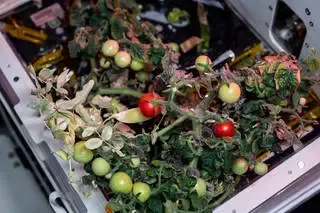
Two of the returning experiments, EVOO in Space and XROOTS, involve food. XROOTS is an experiment to see how growing food using hydroponics and aeroponic systems works in a space environment. Previous experiments aboard the space station found that more traditional growth methods using soil or other particulates isn’t as effective due to containment, maintenance, and sanitation issues. This issues makes it difficult to scale up crop production for use in future long duration space missions. If hydroponics and aeroponics are shown to be effective methods, future missions to the Moon and Mars could have a renewable source of food.
EVOO in Space is looking into the effects of exposure to the space environment of extra virgin olive oil. The hope is that the olive oil will be able to withstand time spent in space. The olive oil is high in antioxidants and anti-inflammatory properties which could be useful during long duration space missions, as long as the oil isn’t negatively impacted by its time in space. The samples of oil that have been on the space station will be examined and compared to control samples that remained on Earth.
Another experiment called Rhodium Microgravity Bioprospecting-1 is returning with the cargo. Bioprospecting is looking for plants and animals that produce unique materials under the stressors of space that can be used as drugs, biochemicals, and other valuable materials. The RMB-1 experiment was searching for a way to find microbes that could yield such materials.
The AstroRad experiment is a vest that is designed to protect the organs of astronauts from high doses of radiation caused by unpredictable solar particle events (SPEs). Such SPEs will be a hazard for crew on long duration missions to the Moon and Mars. On the ISS, crew wore the vest as they went about their daily activities. The crew recorded how the vest felt and how well the could work while wearing it. This feedback will be used by the developers of the vest to improve the design for future missions.
Finally, Suture in Space is looking into sutures and wound healing in a microgravity environment. Tissue samples with sutures were monitored by crew about the ISS. Those samples will be returned to Earth where teams of scientists will conduct further studies on the samples to help us understand how the healing of wounds in space might work. This is important for long duration space missions where there is a potential for astronauts to be injured far from medical care.
This sampling of science being conducted on the ISS is a great way to see how the station is helping to prepare humanity for further exploration of the Solar System. On top of that, many of the experiments could lead to better understanding and new technologies here on Earth.