
When ISS Astronauts Unleashed Killer Viruses on E. Coli, Strange Things Started to Happen
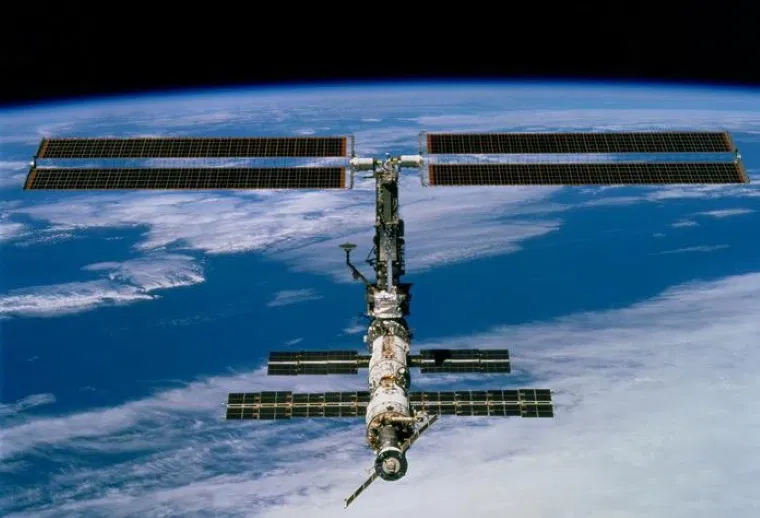
After astronauts aboard the International Space Station (ISS) unleashed killer viruses, called phages, that infect bacteria on E. coli samples, the viruses began acting strangely, even though they ultimately succeeded in infecting their prey.
The University of Wisconsin-Madison researchers behind the experiment suggest that understanding how the station’s microgravity environment may have altered the infection process in unexpected ways could help engineer new viral weapons against drug-resistant infections on Earth.
How Killer Viruses Infect Bacteria on Earth
The invisible battle between phages and their host bacteria constitutes a major component of the planet’s microbial ecosystems. According to a statement detailing the experiment with phages aboard the ISS, this ongoing microscopic interplay is often described as an evolutionary “arms race” where the bacteria develop new ways to defend against the attacks, prompting the viruses to adapt new strategies to bypass these defenses.
Although this ongoing fight for supremacy between adaptive bacteria and killer viruses has been well studied, these experiments have been conducted exclusively on Earth. Conversely, how this microbial arms race might unfold under the effects of microgravity remains unexplored.
Since previous experiments have shown that the microgravity environment aboard the ISS alters bacterial physiology and the physics of collisions between microscopic opponents, the UW-Madison team wanted to see whether these disruptions in typical interactions would increase or decrease the phages’ infective potential.
Studies Aboard the ISS Reveal Genetic Mutations Increasing Viral Infectivity
Led by UW-Madison researcher Phil Huss and supported by the Defense Threat Reduction Agency, the team designed two sets of identical E. coli samples and infected them with the phage T7. One set remained incubated on Earth, while the other was sent to the ISS.
When the astronauts aboard the space station examined the infected samples, they found that the T7 virus successfully infected the E. coli. However, the scientists also observed an initial delay before the infection occurred.
Curious about what caused the phage’s strange behavior, the team performed whole-genome sequencing of both the virus and the infected bacteria. According to the team’s statement, this analysis revealed “marked differences” in the genetic profiles of both the T7 phages and the infected E. coli compared with those of the samples still on Earth.
A further analysis found that the ISS’s microgravity environment helped E. coli accumulate genetic mutations over time that protected them against the infecting phages. Conversely, the team found that the phages also appeared to gradually accumulate microgravity-induced mutations that increased their infectivity or their ability to bind host cell receptors.
After these tantalizing results, the team applied a high-throughput analytical technique called ‘deep mutational scanning’ designed to offer a closer look at potential changes to the T7s receptor binding protein. As expected, this analysis showed that the key performer in the bacterial infection process exhibited “further significant differences” compared to the Earth samples.
Notably, the research team said separate experiments performed on Earth ‘linked’ these “microgravity-associated” changes to the T7 receptor-binding protein and to activities associated with urinary tract infections in humans that are typically resistant to such infections. This finding suggests that the microbial arms race in space may result in more infectious killer viruses and more resistant bacteria than on Earth.
Engineering More Deadly Phages Could Help Fight Antibiotic-Resistant Infections
When discussing the study’s potential implications, Huss and colleagues noted that their findings suggest the feasibility of studying and potentially engineering viruses in the microgravity environment of the ISS.
The team also noted that such research could yield fresh insights into the adaptability of microbial life, potentially leading to breakthroughs in human health and space exploration, or engineered viruses capable of attacking antibiotic-resistant bacteria.
“Space fundamentally changes how phages and bacteria interact: infection is slowed, and both organisms evolve along a different trajectory than they do on Earth,” they explain. “By studying those space-driven adaptations, we identified new biological insights that allowed us to engineer phages with far superior activity against drug-resistant pathogens back on Earth.”
The study “Microgravity reshapes bacteriophage-host coevolution aboard the International Space Station” was published in PLOS Biology.
Christopher Plain is a Science Fiction and Fantasy novelist and Head Science Writer at The Debrief. Follow and connect with him on X, learn about his books at plainfiction.com, or email him directly at christopher@thedebrief.org.