What Is the Rhodium Space Biobank?
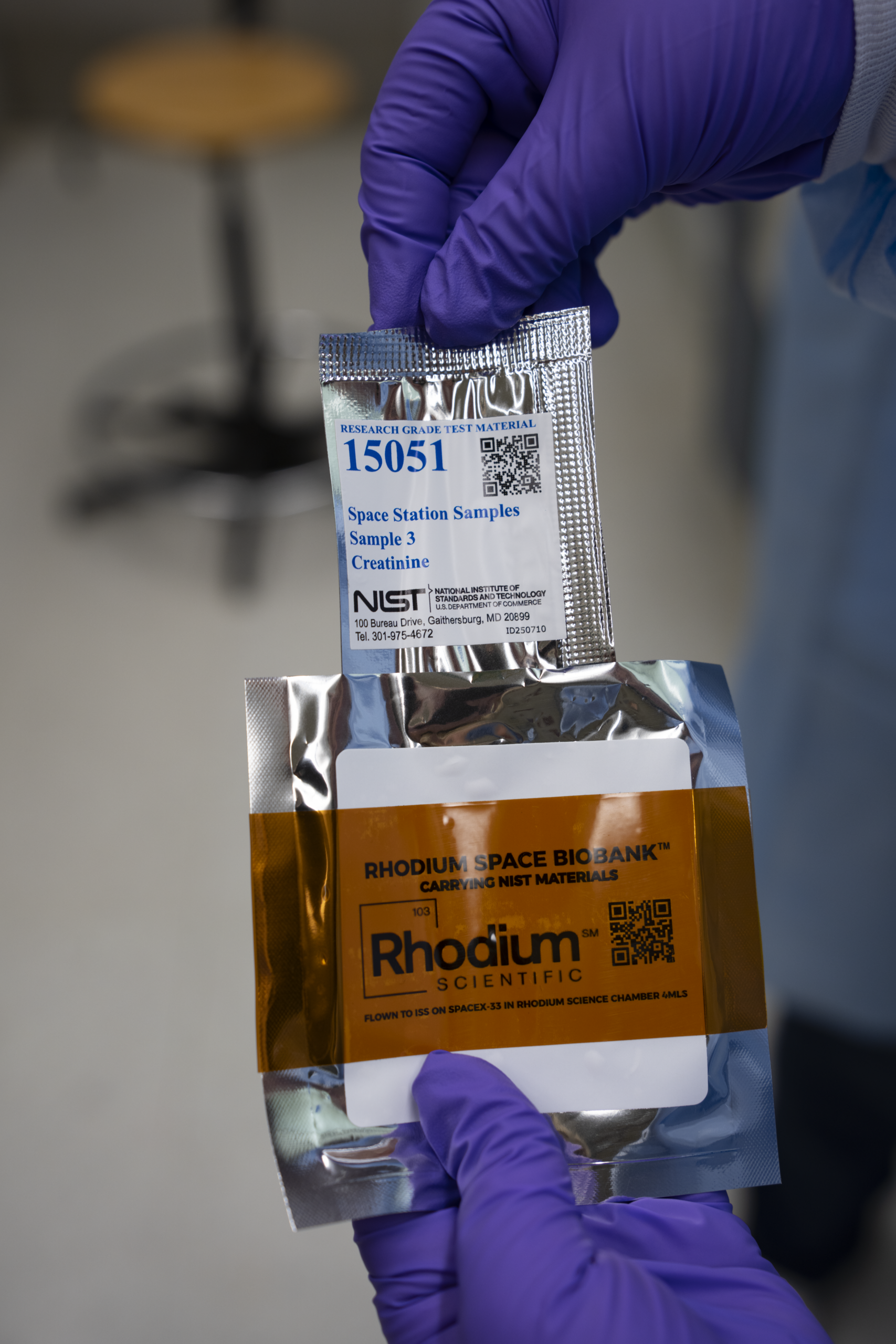
The Rhodium Space Biobank® is the nation's first commercially available repository of space-flown samples for scientific use. The Biobank is backed by the National Science Foundation (NSF) and supported by National Institute of Standards and Technology (NIST), ISS National Lab, and the U.S. Office of Space Commerce.
As the premier and sole repository of its kind, it lowers barriers to entry for researchers testing in space, advances space-based discovery, and provides a true Earth-based analog and control system for space testing and comparisons.
Every sample is either research grade or FDA-aligned and comes with full preservation, cataloging, and environmental space datasets. Built on more than a decade of microgravity research experience and run by an expert team, the Biobank offers true end-to-end chain of custody from pre-flight preparation through long-term cryostorage and data integration.
The result: ground controls and analogs you can trust, and the capability to turn space missions into reusable, investable scientific infrastructure.
By the Numbers
7
Successful Rhodium Space Biobank® Missions
4
Sample standardization programs across biological, medical, agriculture, and advanced materials
What We Offer

Space-Flown Sample Access & Sale
Commercial access to authenticated, chain-of-custody controlled space-exposed samples across all material categories. Access is provided to vetted, approved customers under defined regulatory classification.

Research-Grade Sample & Reference Libraries
Standards-aligned sample collections designed to support benchmarking, validation, and comparative studies, including time-series exposure data and material stability characterization.

Data, Metadata & Analytics Licensing
Structured metadata, standardized analytical outputs, and direct space vs. ground comparison datasets - available for commercial licensing.
Consortium Memberships
Membership-based access model offering streamlined entry to samples, data, and future flight opportunities — with pre-negotiated IP frameworks, expedited compliance onboarding, and priority access to sample libraries.
Process & Compliance
The Rhodium Space Biobank® operates through a structured three-phase process ensuring scientific value, sample integrity, and verified space environment data.
Mission Preparation & Spaceflight
Rhodium's QuIC Space Process™ guides science planning, flight manifest alignment, launch, on-orbit operations, and sample return — formally closing chain-of-custody with the Biobank upon receipt.
Analytics & Storage
Returned samples are assigned a certificate of spaceflight, inventoried, and paired with accompanying space environmental data. Samples and data are stored in secure and continuously monitored conditions. Data characterizations of the space sample begins.
Customer Fulfillment
Customers undergo formal vetting — including export-control screening, due diligence, and identity verification — before receiving access to authenticated samples and licensed datasets under defined contractual controls.
QA practices supporting chain-of-custody, data security, and compliance are maintained across all three phases.